WOODLAND WALK | CANNOCK CHASE
Cannock Chase – our famous neighbour.
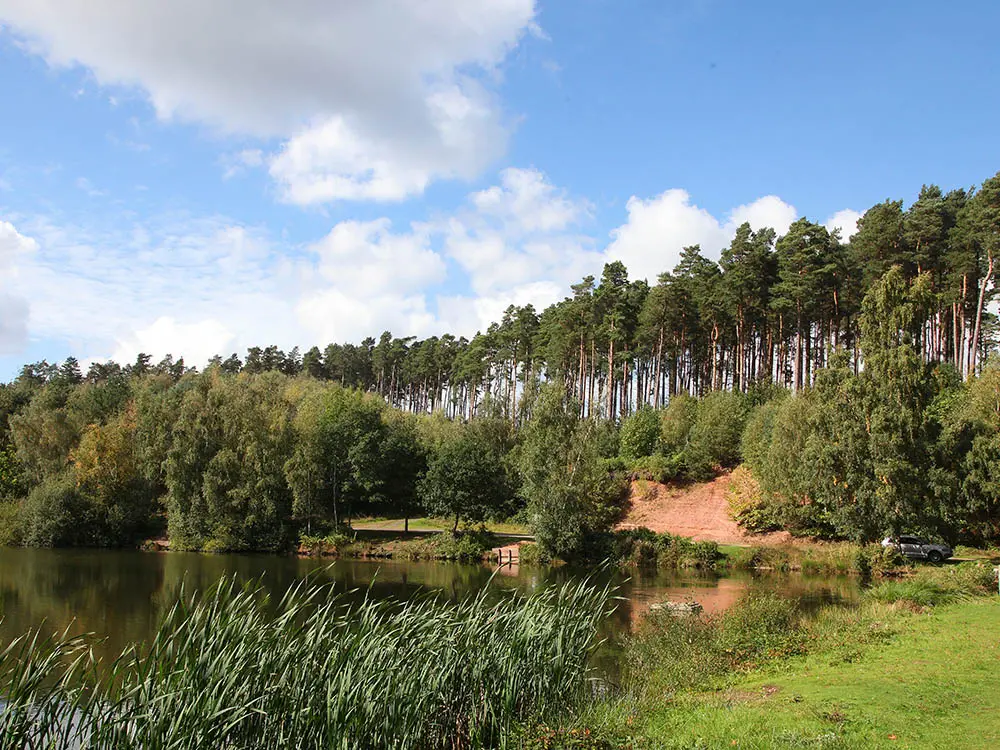
At over 26 square miles, Cannock Chase is England’s smallest mainland Area of Outstanding Natural Beauty – a title it was given back in 1958. As a truly historic landscape The Chase was a medieval royal hunting forest for William the Conqueror in 1086. Fallow deer that could be related to the original herd introduced in Norman times, still roam free.
During your stay at Hoar Cross Hall – it’s well worth a visit with natural deciduous woodlands, coniferous plantations and open heathland to explore. In fact, you might discover the ancient oaks that are between 200 and 600 years old, the only surviving remnant of the ancient forest.
The varied landscape of the Chase, crossed by many footpaths and bridleways, presents a changing array of colours throughout the year, from purple heather, blood red bilberry bushes and rusty bracken, to dark green pine or silvery stands of birch trees.
The Chase has been home to many large communities that grew up around the industries inside it from glassworks and brick-making to tile-making.
Interestingly, Cannock Chase played an important role in World War I. Thanks to its great transport and communication lines, two large military training camps were built inside. Brocton and Rugeley camps were vital training grounds with more than 500,000 soldiers passing through them during the war. A section at Brocton Coppice also became a POW camp and were like little towns with their own railway line, roads, sewerage system, shops, and even a picture house! A 12-ward hospital was also built at Brindley Heath that carried on treating gas attack and shell-shock victims until 1924.
If you’d like to know more about its history, or to plan a trip to Cannock Chase, visit: www.visitcannockchase.co.uk